Grassy Weeds
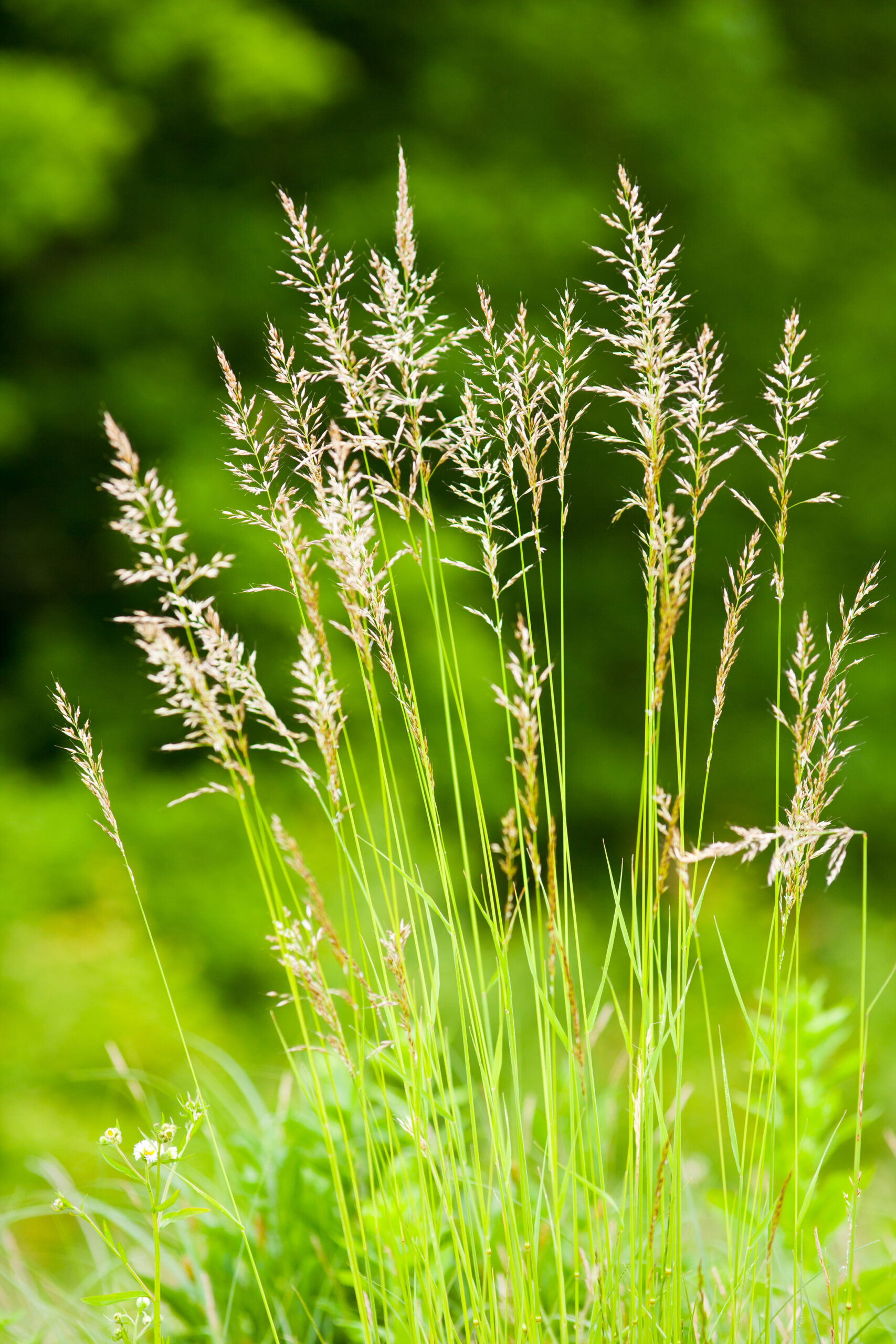
A grassy weed is a plant that looks like grass but is undesirable in a lawn, pasture, or turf because it competes with the desired grass species.
Key Features of Grassy Weeds
- Leaf blades: Narrow and similar to turfgrass
- Growth habit: Often upright or spreading, sometimes forming clumps
- Stems: Round, not triangular
- Reproduction: By seed, sometimes rhizomes or stolons
Scientific name (common name)
- Digitaria sanguinalis (Large Crabgrass)
- Digitaria ischaemum (Smooth Crabgrass)
- Digitaria Villosa (Hairy Crabgrass)
- Eleusine indica (Goosegrass)
- Elymus repens (Quackgrass)
- Echinochloa crus-galli (Barnyardgrass)
Common Examples
- Large Crabgrass
- Coarse, upright annual that can grow 6–12 inches tall.
- Forms clumps and spreads quickly in bare or thin turf.
- Produces many seeds that germinate in late spring when soil warms.
- Smooth Crabgrass
- Smaller, finer-textured than large crabgrass; often grows 3–6 inches tall.
- Forms dense mats that can crowd out turfgrass.
- Also germinates in warm soil; produces abundant seed heads.
- Hairy Crabgrass
- Similar to large crabgrass but with fine hairs on leaves and stems.
- Clump-forming summer annual; prefers sunny, disturbed areas.
- Produces many seeds, but less aggressive than large crabgrass.
- Goosegrass
- Summer annual with gray-green, prostrate stems that form dense mats.
- Tolerates compacted soil and high foot traffic.
- Produces seeds in small finger-like clusters.
- Quackgrass
- Cool-season perennial that spreads through rhizomes.
- Can quickly take over a lawn if not controlled.
- Leaves are flat and have prominent veins.
- Barnyardgrass
- Fast-growing summer annual.
- Often invades poorly drained areas or lawns with heavy watering.
- Produces tall, coarse clumps with seed heads that look like small bottlebrushes.
Key Life Cycle Points for Crabgrass
- Emergence (Start to Appear)
- Soil temperature: ~60–65°F (usually late April to early May)
- Crabgrass seeds germinate in warm soils and grow quickly in bare or thin areas of turf.
- The young plants often go unnoticed until they start growing faster than the surrounding grass.
- Peak Growth
- Occurs during the hot summer months (June–August)
- Plants spread rapidly, forming clumps or mats, and produce seed heads.
- Natural Die-Off
- Crabgrass is an annual, so it dies naturally when fall arrives and soil cools (~September–October).
- Even though the plant dies, it leaves behind seeds in the soil that can germinate the following spring.
Summary Table
Stage | Approx. Timing (NJ) | Notes |
Emergence | Late April – Early May | Soil ~60–65°F, small seedlings appear |
Peak Growth | June – August | Fast growth, seed head production |
Natural Die-Off | September – October | Plant dies; seeds remain for next year |
Key Takeaway:
Crabgrass starts in late spring, grows fastest in summer, dies in fall, but its persistent seed bank ensures it returns every year. Its ability to grow faster than existing turfgrass is the main reason it can dominate thin or weak areas of a lawn.